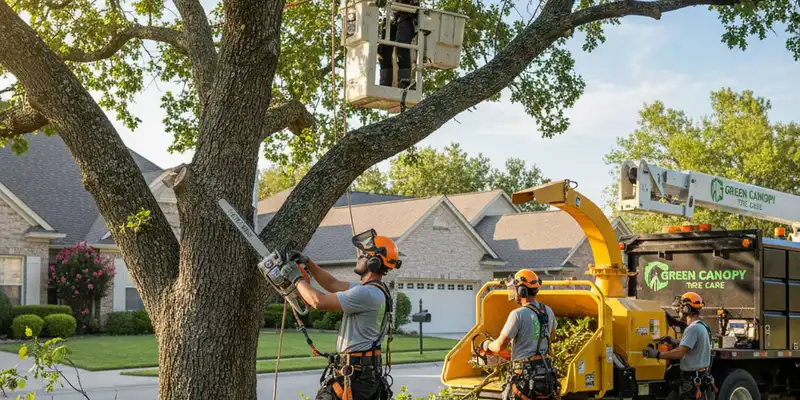
Cottonwood Heights stretches along the east side of the Salt Lake Valley, with homes ranging from compact mid-century properties near 2300 East to larger foothill lots rising toward the Wasatch Front. Steep driveways, narrow side yards, and dense stands of mature deciduous and conifer trees create ongoing access and safety challenges. The network of tree care professionals in Salt Lake City knows how to evaluate slope-heavy properties, manage older canopies, and remove dangerous limbs while keeping homes and yards accessible in a neighborhood shaped by elevation and established landscaping.
That is one reason so many property owners in Cottonwood Heights, UT, turn to Arbor Tree Care for year-round maintenance.

Prefer to Talk to An Expert?
(801) 214-0427
Why Cottonwood Heights Property Owners Trust Local Professionals to Get It Right
Because they work in the area every day, these professionals understand the foothill terrain, mature urban canopy, and seasonal wind exposure that define Cottonwood Heights. Each job is completed with equipment and methods suited to slope access limits, storm-related limb failure, and the drought pressure common across this part of Salt Lake City.
From tree pruning specialist services on steep residential streets near Wasatch Boulevard to hazardous tree clearing close to the Bengal Boulevard commercial corridor, every project is completed with careful technique and dependable site protection in mind.
If you care about your property, work with local contractors who can help keep your canopy balanced, your slopes manageable, and your home safer in Cottonwood Heights.
Our Tree-Service Services
in Salt Lake City, UT, Include
A Service Area Designed to Fit Your Cottonwood Heights Neighborhood
This foothill community has sloped lots and tight access points, so tree care has to be tailored rather than generic. Local crews bring custom solutions to changing grades, retaining wall edges, and established tree lines throughout the area.
Whether you own a mid-century ranch in Highland Park, a newer home on the upper Cottonwood Heights bench, or a commercial site near the Fort Union Boulevard retail area, the approach is adjusted to fit the property.
From stump removal solutions and tree trimming to tree disease treatments and root protection, services are shaped around the neighborhood’s layout and each site’s specific needs.
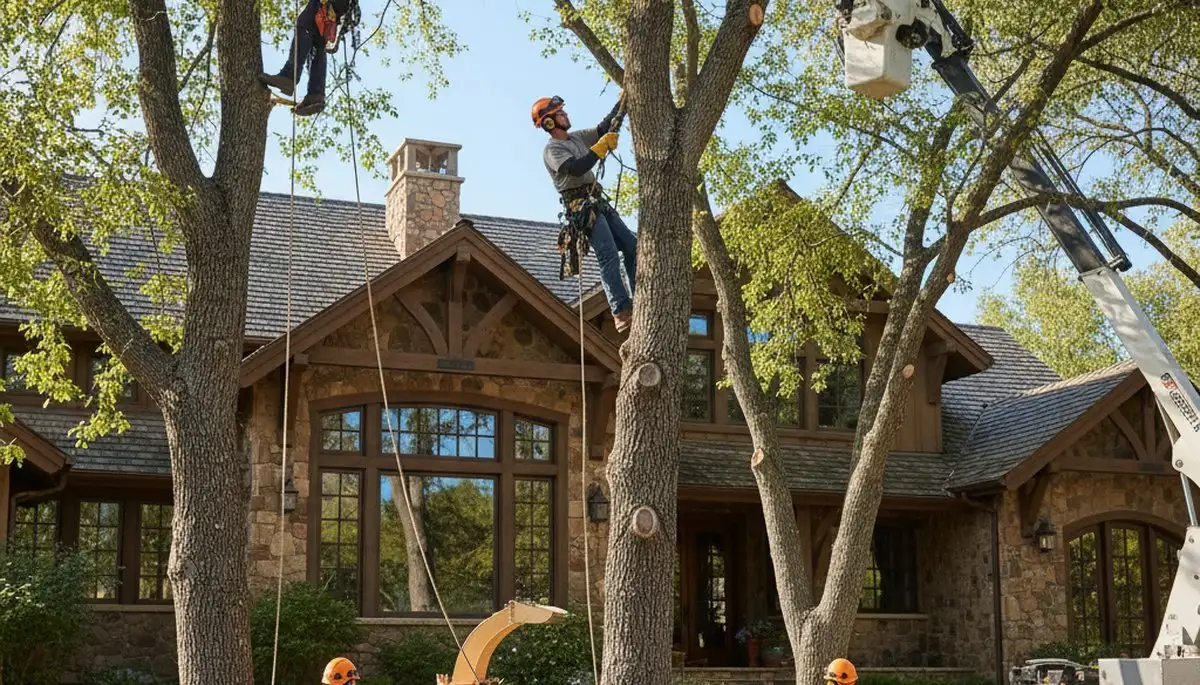
Cottonwood Heights’s Mature Canopy, Shaped by Decades of Growth
Cottonwood Heights developed steadily through the mid-twentieth century as families moved east from the Salt Lake Valley floor and planted cottonwoods, maples, blue spruces, and Lombardy poplars that still rise above rooflines and utility corridors today. That history remains visible in aging root systems, crowded canopy layers, and weakened trunks that influence how tree work must be handled now.
Aging Tree Canopy Over Residential Structures
Many homes in Cottonwood Heights, especially in older neighborhoods near 2300 East and Holladay Road, have trees that were planted fifty years ago or more and have outgrown their original space. The result is often long, heavy limbs and included bark at major branch unions, which can raise the risk of failure during wind or heavy snow.
Local professionals manage overgrowth with selective crown reduction, focused deadwood removal, and structural pruning that helps reduce roof contact and long-term access problems.
Slope Erosion and Root Exposure on Foothill Lots
The area’s elevation changes add character and help with drainage, but they also make soil erosion around tree bases more common. Once roots become exposed, they are more vulnerable to mower damage and moisture loss, which can weaken anchoring roots over time.
Crews address these conditions with root collar excavation, mulch placement, and root zone care designed for the grade changes and soil compaction patterns found throughout Cottonwood Heights.
Drought Stress in Cottonwood and Maple Populations
Inconsistent rainfall and hot summer temperatures have left many deciduous trees in Cottonwood Heights struggling to maintain full canopies and healthy leaf growth.
Trusted professionals support these trees with deep root fertilization, irrigation checks, and tree fertilizing programs that help improve resilience and reduce early leaf drop on affected properties.
High-Wind Events Along the Wasatch Bench
Seasonal canyon winds, especially those funneled through Little Cottonwood and Big Cottonwood canyons, can bring strong gusts that lead to broken limbs or uprooted trees on exposed foothill lots.
Experienced crews respond with emergency rigging, sectional felling on confined properties, and post-storm debris removal to restore access quickly, even when wind conditions are difficult across the Wasatch Front. Properties in nearby areas, including those served by tree trimming services in Sandy, UT, face similar canyon wind exposure and need the same kind of preparation.
Confined Access on Steep Driveways and Narrow Lot Lines
Steep driveways and tight setbacks are common in Cottonwood Heights, which makes equipment placement and safe limb lowering much more difficult.
Local teams rely on compact aerial lifts and hand-climb rigging methods, with close attention to property boundaries and structural protection, so tree care works on slope-heavy lots with limited access. Nearby communities such as those served by tree removal contractors in Draper, UT face similar terrain, which shows why foothill-specific experience matters.
For ideas on keeping your Cottonwood Heights property cared for throughout the year, request a free quote by calling (801) 214-0427.
Every property deserves safe access. Let Arbor Tree Care help you maintain it!

Begin your tree service project today!
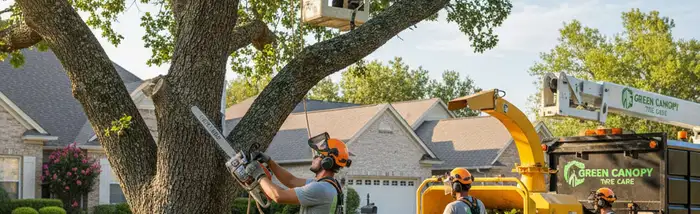
Tree Services in Cottonwood Heights, UT: Care for Every Season
From routine pruning to emergency storm cleanup, local professionals help keep Cottonwood Heights properties safer, healthier, and easier to access in every season:
Routine Tree Trimming and Pruning in Cottonwood Heights, UT
- Canopy clearance above rooflines and gutters on steep residential lots near Wasatch Boulevard, where branches from mature maples and cottonwoods can collect debris and create contact damage in fall and winter.
- Crown thinning for better wind response on blue spruce and Austrian pine trees common on upper Cottonwood Heights bench properties, helping reduce wind resistance without compromising overall structure.
- Structural tree trimming services for co-dominant stems on older deciduous trees near the 2300 East corridor, where included bark at major branch unions can increase the chance of splitting under snow load.
- Utility line clearance pruning near the Bengal Boulevard and Fort Union Boulevard areas, where overgrowth into overhead lines can create safety concerns and service interruptions for homes and businesses.
- Seasonal deadwood removal for established Lombardy poplars in mid-century neighborhoods, reducing hazard potential before spring winds arrive across the Wasatch bench.
Trimming before winter storms arrive helps protect the tree structure and the property below it through the colder months.
Tree Removal Services in Cottonwood Heights, UT
- Hazardous tree removal on sloped lots near the upper residential bench, where leaning conifers and weakened deciduous trees above structures call for controlled sectional removal with rigging suited to tight, grade-challenged yards.
- Storm-damaged tree removal after canyon wind events that leave split trunks, uprooted root balls, or suspended limbs across driveways, fences, and utility corridors in Cottonwood Heights neighborhoods.
- Dead tree removal services for drought-stressed cottonwoods and beetle-killed Engelmann spruces that have lost strength and now pose hazards near walkways and parked vehicles.
- Whole-tree removal near retaining walls and foundations, where roots from aging trees can begin pressing against hardscape structures and require careful extraction to avoid added damage.
- Commercial property tree removal in the Fort Union Boulevard and Bengal Boulevard zones, where overgrown parking lot trees and aging ornamentals no longer fit safety or visibility needs in busy commercial spaces.
Removing weakened trees before they fail helps protect both the property and the people who use it throughout the year in Cottonwood Heights.
Stump Grinding and Cleanup in Cottonwood Heights, UT
- Below-grade stump grinding on sloped lots, where visible stumps on foothill properties create trip hazards and make mowing harder on uneven terrain common across Cottonwood Heights yards.
- Root flare grinding near retaining walls and hardscape, removing leftover root mass from trees that continue pressing against concrete borders, flagstone paths, and block walls.
- Post-removal site cleanup and debris hauling after large tree removals, clearing wood chips, surface roots, and trunk sections from tight driveways and side yards without affecting neighboring properties.
- Stump treatment for resprouting species, especially cottonwood and Lombardy poplar stumps in mid-century neighborhoods, where untreated stumps can send up aggressive new growth within a single season.
- Lawn restoration prep following stump removal, including topsoil leveling and surface grading so turf can be re-established cleanly on sites where the stump left an uneven surface.
Taking care of stumps soon after removal helps stop regrowth, reduce pest habitat, and recover usable yard space across Cottonwood Heights properties of many sizes and slopes.
Emergency Tree Services in Cottonwood Heights, UT
- Rapid storm response for fallen trees blocking driveways and access roads, especially after high winds move through Little Cottonwood and Big Cottonwood canyon corridors and spread debris across local streets.
- Emergency limb extraction from rooftops and structures, when snow-loaded or wind-thrown branches from mature maples, cottonwoods, and blue spruces make contact with roofs, fences, or parked cars on tight Cottonwood Heights lots.
- 24-hour emergency tree services for hanging limb hazards, addressing partly attached branches suspended over walkways, driveways, and utility lines after storms across the Wasatch bench.
- Post-storm site assessment and priority triage, where crews review multiple impacted trees on the same property and determine which ones need immediate removal, stabilization, or follow-up care.
- Winter snow load emergency response for conifers on upper Cottonwood Heights bench properties, where heavy wet snow can split crowns and damage blue spruce, Austrian pine, and Douglas fir trees.
Fast action after storm-related tree damage lowers the risk of further property loss and helps restore safe access when weather changes quickly in Cottonwood Heights.